

Tapping Asia’s Growth Story
A Deep Heritage of High-Conviction Investing in Asia
From broad regional to market-specific strategies, we focus on uncovering those rare investment opportunities that can generate long-term alpha – before the market realizes their worth.
Asia at-a-glance: did you know?
More than 4.7 billion people, or 60% of the world’s population, live on the continent, speaking around 2,300 languages and representing some of the world's oldest cultures.13
Asia’s share of global GDP is over 54%, whereas Europe and North America combined now account for only about 33%. Asia is likely to account for 58% of global GDP by 2030.14
Indonesia follows China, India, and the US as the world’s fourth most populous country, is the largest economy among the 10 ASEAN nations, and is expected to have a 200 million‑strong middle class by 2030. This would make Indonesia the world’s fourth largest consumer market, surpassing Russia and Japan and trailing only China, India, and the US.15
The Philippines overtook Vietnam and Malaysia to become Southeast Asia's fastest-growing economy in 2023, with expansion driven by consumption, services, and investment.16
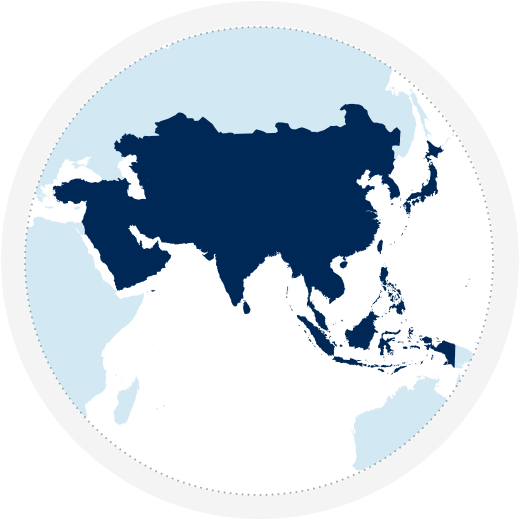
Defining features of a vibrant region

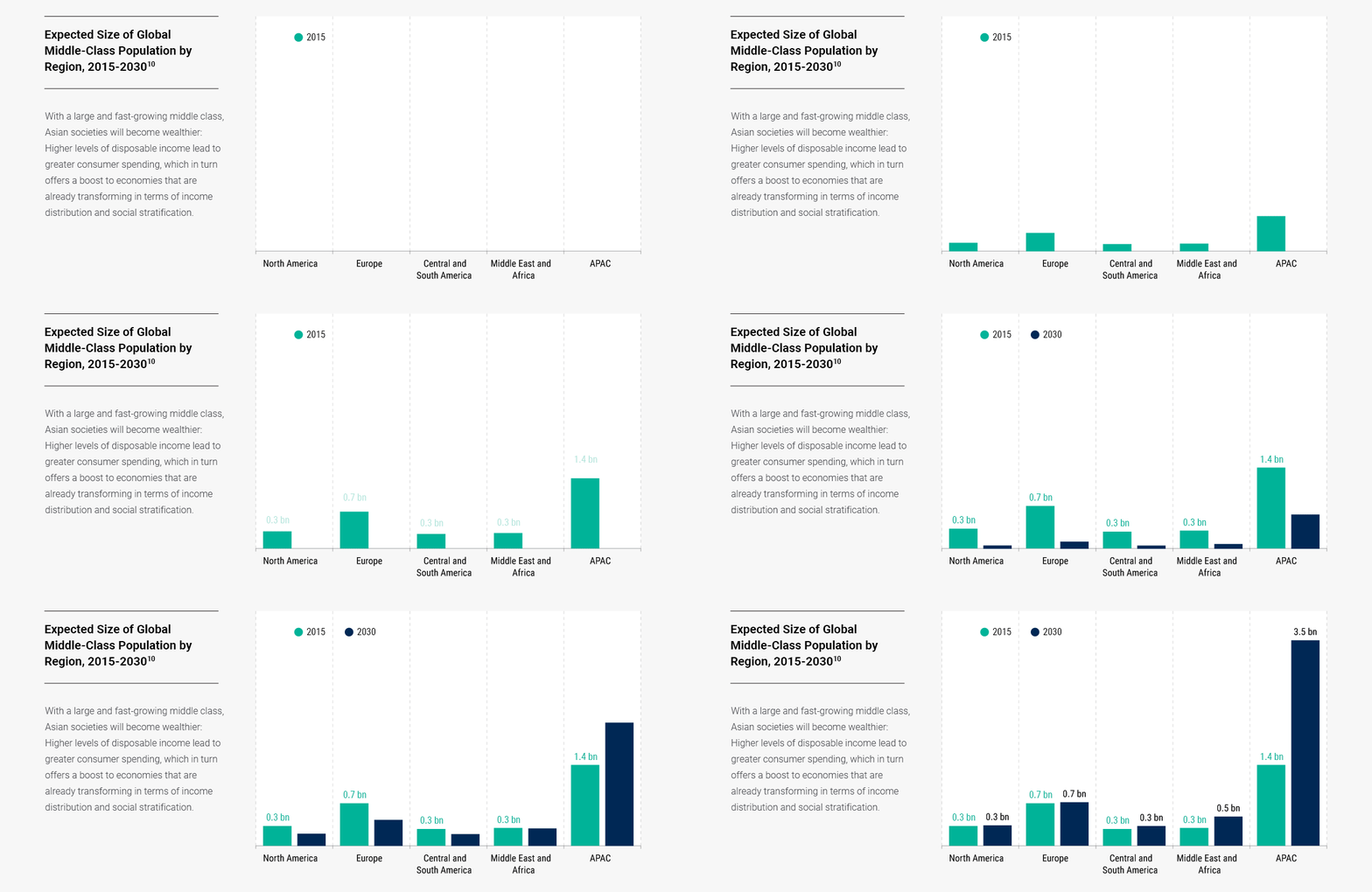
Urbanization rates are increasing across the region, with around 55% of the total population expected to reside in urban areas by 2030.5

Technology spending growth in Asia is predicted to reach 5.7% in 2024, outpacing the global trajectory of 5.3% – especially in India, as well as the Philippines, Vietnam, Indonesia, Malaysia, and China.6

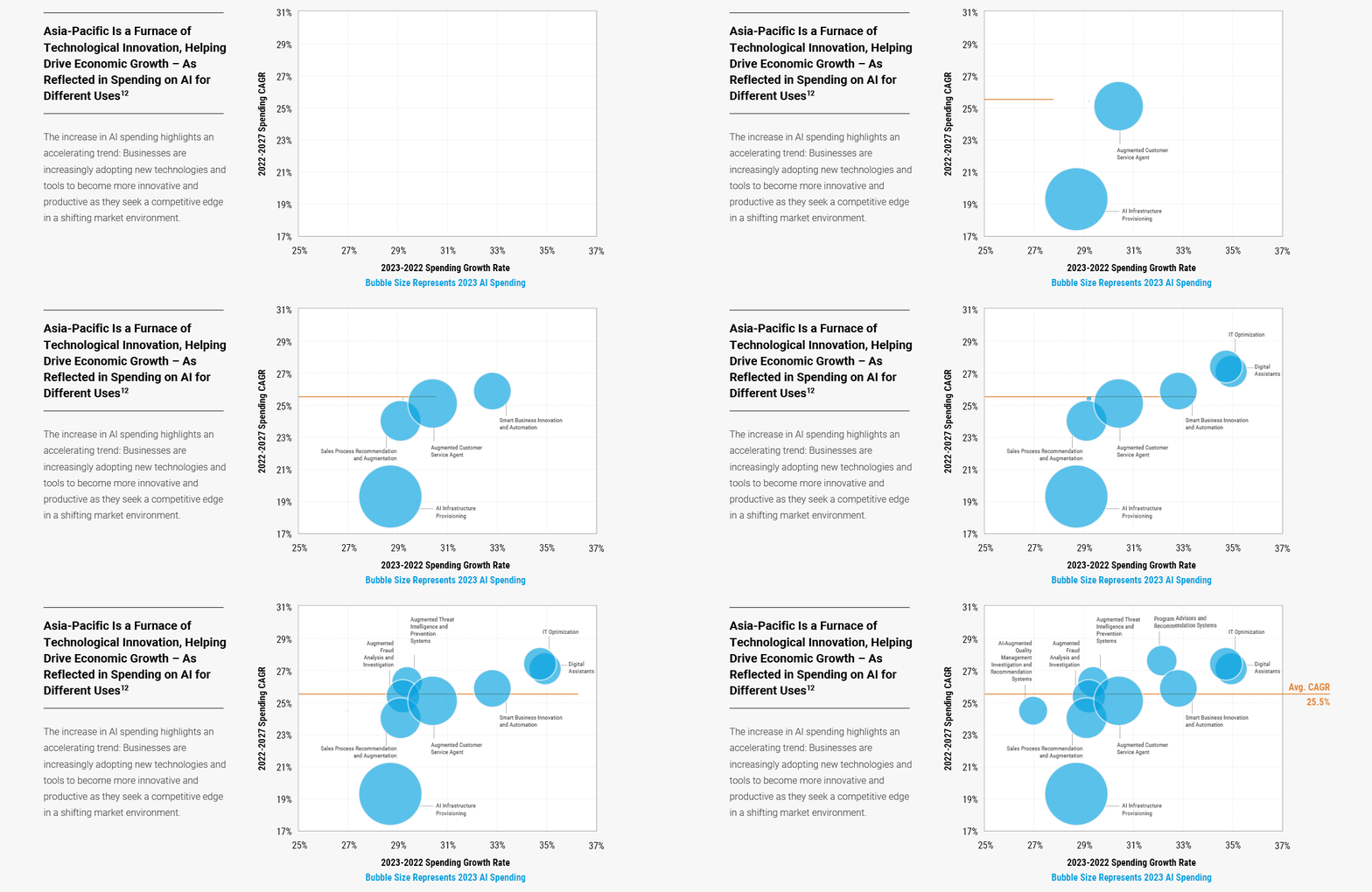
Spending in Asia-Pacific on artificial intelligence (AI), including software, services, and hardware, is set to grow to US$78.4 billion in 2027, with a compound annual growth rate of 25.5% between 2022 and 2027.7

Consumer spending – for example, on clothing and footwear in Southeast Asia – is forecast to rise by US$23.2 billion between 2024 and 2029, an increase of 35%.8

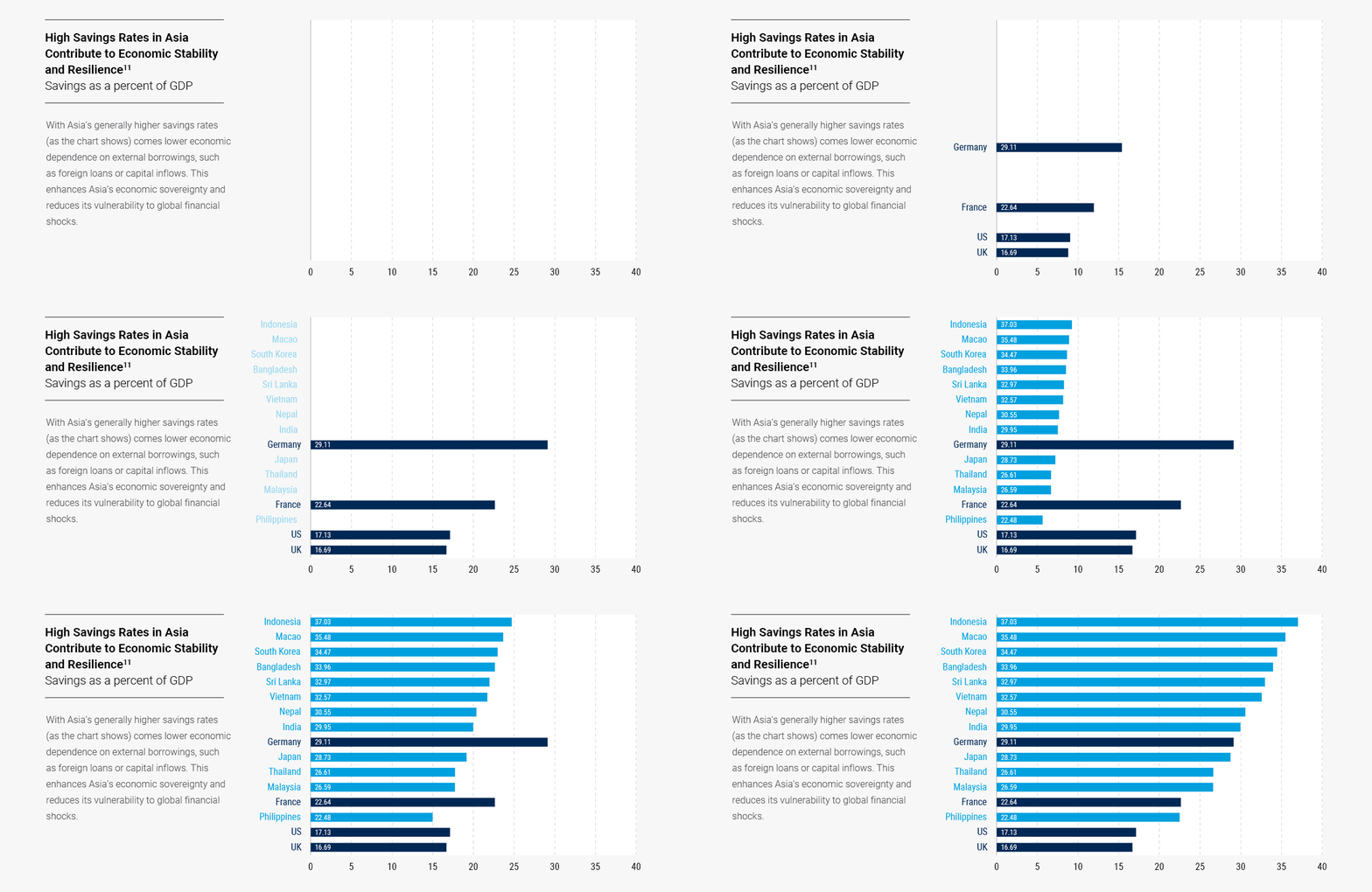
Average savings in Asia as a percent of GDP, at 32%, are significantly higher than in North America (19%) and Europe (24%).9
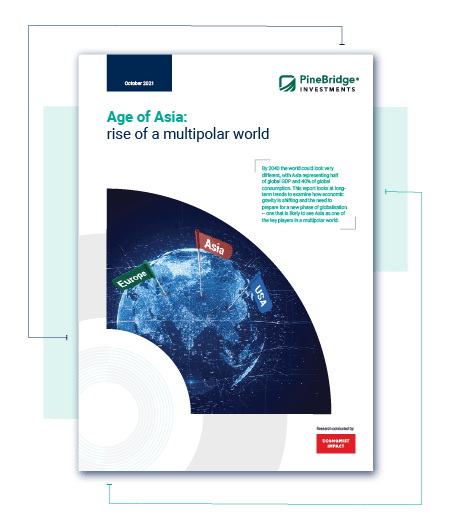
Age of Asia: Rise of a Multipolar World
In partnership with Economic Impact, this report examines the circumstances, opportunities, and risks that business leaders and investors looking at the region should take into account as Asia wields greater economic gravity in an increasingly multipolar world.

Asia Fixed Income: A Rising Star on the Global Stage
The US dollar-denominated Asian bond market has grown to US$1 trillion – approximately 85% of which is investment grade (IG)17.
Why is it time to consider a core allocation to Asia IG credit?
Asia is well-positioned to benefit from the new US interest rate era as well as global economic headwinds.
While Asia IG spreads are now relatively tight, yields remain attractive. Asia duration is also shorter than for global IG peers.
Asia IG has delivered solid risk-adjusted returns and beaten those of other fixed income assets. Over the past 10 years, Asia IG bonds have delivered superior total returns to peers.
Allocations to Japan and Australia add diversification benefits14.
Greater appetite for Asia IG credit is expected both from home-biased local investors and from global investors such as insurers, which view exposure to this asset class as a means to match their own liabilities in the region.
Asia Investment Grade Bonds Have Outperformed Over the Past Decade
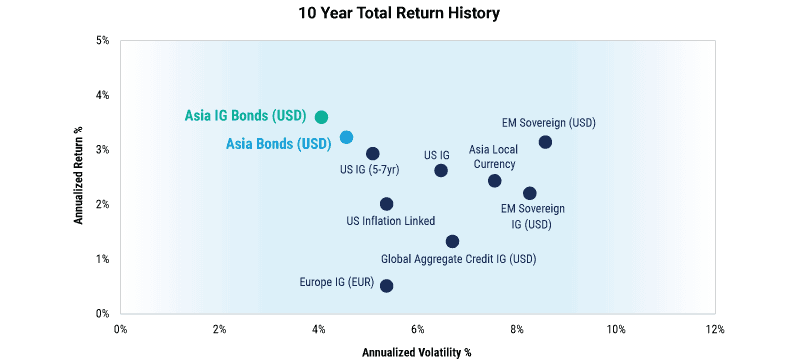
Sources: Bloomberg. Rolling 10-year data as of 30 June 2024.
Asia USD Bonds by the JPM JACI index, Asia IG USD Bonds by JPM JACI Investment Grade, EM Sovereign (USD) by the JPM EMBI Global Diversified index, EM Sovereign IG (USD) by the JPM EMBI Global Diversified index Investment Grade, US IG by Bloomberg US Credit Index, US IG (5-7yr) by BofA ICE index, US Inflation Linked by Bloomberg US Govt Inflation-Linked All Maturities Total Return Index, Europe IG (EUR) by Bloomberg Pan European Aggregate Credit, Global Aggregate Credit IG (USD) by Bloomberg Global Agg Credit Total Return Index, Asia Local Currency by Bloomberg Asia Local Currency Index Diversification does not insure against market loss. For illustrative purposes only. There is no assurance that the investment strategies and processes mentioned herein will be effective under all market conditions. investors should evaluate their ability to invest for a long-term based on their individual risk profile especially during periods of downturn in the market. Past performance, or any prediction, projection or forecast, is not indicative of future performance.

Asia Equities: Riding the Regional Growth Wave
The region’s strong growth momentum and promising outlook bode well for active equity investors.
Key themes and markets in Asian equities
Disruptive technological innovation
Companies that are well-placed to benefit from the transformations underway amid Asia’s structural growth story.
Disruptive trends ranging from automation and digitalization to electric vehicles to generative AI to healthcare innovation.
A tech-led transformation across ASEAN as global investors diversify supply chain risks.
Tech-heavy markets like Taiwan and Korea well-positioned to capitalize on the tech wave and semiconductor demand.
Small-cap and mid-cap names
With over 3,000 companies, the small- and mid-cap universe offers a buffet of dedicated niche themes that complement large-cap leaders.
Disruptive technological forces in fast-growing and dynamic markets, from AI to semiconductors to space automation, buoy long-term fundamental trends that investors can tap.
Growth is often much greater and faster given a lower base and exposure to nascent structural themes.
The universe offers diversification for investors within specific segments.
Bottom-up investing in China
Supportive policy rollouts on the fiscal, monetary, and industrial fronts.
Incremental good news flow supportive of considerations to narrow an underweight position, or increase existing exposure to China equities.
Relatively low domestic valuations compared with historical ranges and to regional peers.
A surge in India
India assets are supported by strong economic growth momentum, robust corporate earnings, a broad-based recovery in key sectors, local credit growth, and sound monetary policy.
India is well-placed to benefit from the trend to reshape supply chains.
A robust financial sector is a pillar for domestic growth and stability – improving asset quality at domestic banks and supporting credit expansion in recent years.
The nation boasts high-performing services exports, especially technology.
India has made significant investments in new energy sources, such as renewables.
Capitalizing on ASEAN’s momentum
Continued expansion of domestic demand in many Southeast Asian economies should entice strong foreign direct investment (FDI) inflows.
Multinationals are increasingly relocating manufacturing supply chains to industrialized nations in ASEAN.
A youthful population with a median age of around 30 years is fueling economic activity, innovation, and entrepreneurship.
Indonesia in particular has much to offer, with a resilient and dynamic economy that has seen average real growth of 4.3% in the past decade to 202221, in turn breeding high investor confidence: FDI in 2022 surpassed US$20.3 billion22.
Indonesia continues to invest heavily in key sectors. These include infrastructure projects across transportation, energy, and telecommunications to enhance connectivity, boost productivity, and stimulate economic growth; the thriving digital economy, given the large population and increasing internet penetration, supporting growth in e-commerce, fintech, and digital services; and manufacturing, providing employment opportunities and contributing significantly to GDP.
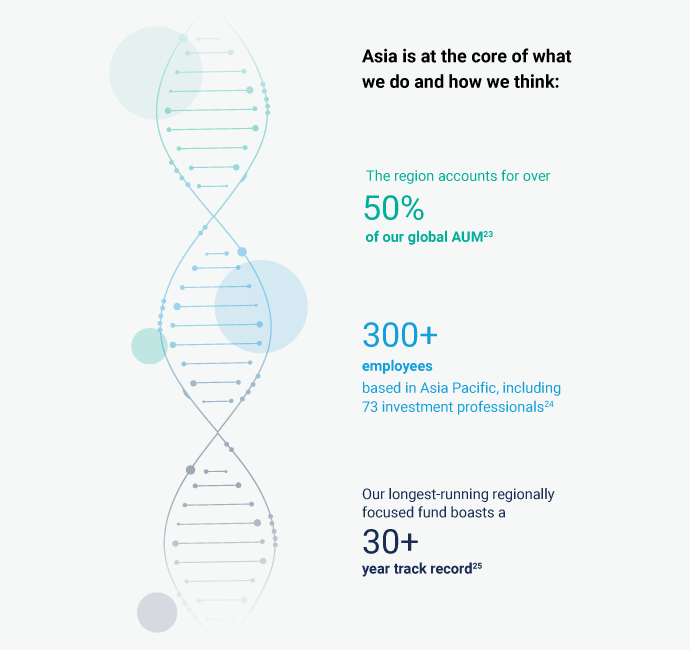
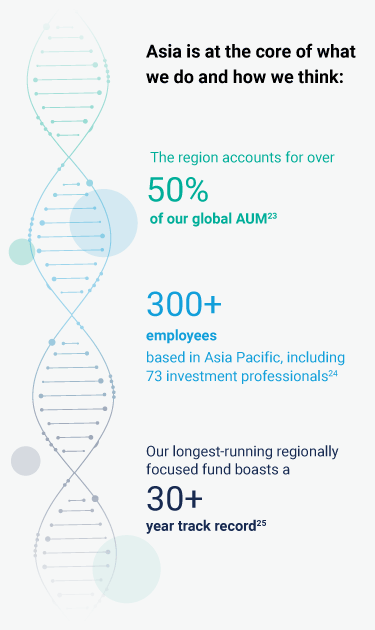
Asia is in our DNA
We have been fully invested in Asia’s success for more than 100 years, and our footprint reflects the region’s dynamism, resilience, and ambition.
Shaped by our heritage as the former investment management arm of AIG, which was founded in Shanghai in 1919, we are now part of Pacific Century Group, an Asia-based private investment group.
This deeply rooted commitment is reflected in our exposure to the region.

Related Insights



Footnotes
1 Source: IMF, World Economic Outlook Update, January 2024. https://www.imf.org/en/Publications/WEO/Issues/2024/01/30/world-economic-outlook-update-january-2024
2 Source: IMF, World Economic Outlook Update, January 2024. https://www.imf.org/en/Publications/WEO/Issues/2024/01/30/world-economic-outlook-update-january-2024
3 Source: IMF, World Economic Outlook Update, January 2024. https://www.imf.org/en/Publications/WEO/Issues/2024/01/30/world-economic-outlook-update-january-2024
4 Source: Capital Economics, “Long Run Outlook,” February 2023. https://www.capitaleconomics.com/publications/emerging-asia-economics-weekly/asia-2050-malaysia-budget-korea-rate-meeting
5 Source: UN Food and Agriculture Organization, January 2023. https://www.fao.org/asiapacific/news/detail-events/en/c/1629103/
6 Source: Forrester, "Global Tech Market Forecast, 2023 To 2027," January 2024. https://en.prnasia.com/releases/apac/forrester-global-tech-spend-to-grow-5-3-in-2024-reaching-4-7-trillion-434395.shtml
7 Source: International Data Corporation, “Worldwide Artificial Intelligence Spending Guide,” September 2023. https://www.idc.com/getdoc.jsp?containerId=prAP51254323
8 Source: Statista, January 2024. https://www.statista.com/forecasts/1162125/fashion-consumer-spending-forecast-in-southeast-asia
9 Source: World Bank, and TheGlobalEconomy.com. www.theglobaleconomy.com/rankings/savings/
10 NZ Ministry for Primary Industries, Global Middle Class 2030 (mpi.govt.nz)
11 Source: World Bank, and TheGlobalEconomy.com. www.theglobaleconomy.com/rankings/savings/
12 Source: International Data Corporation, “Worldwide Artificial Intelligence Spending Guide”, September 2023. https://www.idc.com/getdoc.jsp?containerId=prAP51254323
13 Source: Statista, mid-2023. https://www.statista.com/statistics/237584/distribution-of-the-world-population-by-continent/#:~:text=In%20the%20middle%20of%202023,in%20Asia%20as%20of%202023
14 Source: World Economics, “The Future is Asian,” March 2024. https://www.worldeconomics.com/Thoughts/The-Future-is-Asian.aspx#:~:text=The%20world%20economy%20has%20radically,be%20around%2058%25%20by%202030
15 Source: Hong Kong Trade Development Council, March 2024. https://research.hktdc.com/en/article/MTYyODg3Mzg5OA
16 Source: McKinsey & Company, "Southeast Asia quarterly economic review: Pockets of growth emerge," December 2023. https://www.mckinsey.com/featured-insights/future-of-asia/southeast-asia-quarterly-economic-review
17Source: JPMorgan, Asia Credit Index Investment Grade, PineBridge Investments. As of 31 December 2023.
18 Note: Diversification does not ensure against loss in any market.
19 Source: JP Morgan, as of 31 December 2023. Any opinions, projections, forecasts, or forward-looking statements presented are valid only as of the date indicated and are subject to change. For illustrative purposes only.
20 Source: JP Morgan, as of 31 December 2023. Any opinions, projections, forecasts, or forward-looking statements presented are valid only as of the date indicated and are subject to change. For illustrative purposes only.
21 Source: FocusEconomics, “Economic Growth in Indonesia”, 2023. https://www.focus-economics.com/country-indicator/indonesia/gdp/
22 Source: Fakultas Hukum Universitas Indonesia, October 2022. Indonesia https://law.ui.ac.id/trade-policies-inhibit-investment-in-indonesia-world-bank/
23 Source: PineBridge Investments, as of 31 December 2023.
24 Source: PineBridge Investments, as of 31 December 2023.
25 PineBridge Asia ex Japan Equity Fund launched on 26 July 1991.